
ASTR 1504 - Descriptive Astronomy
Fall 2026 Syllabus, Section 01, CRN 40004,
Credit hours: 3
Course Meeting Times
Log in to view more
Instructor
Course Description
Course Readings
| Group | Title | Author | ISBN |
|---|---|---|---|
| Required | Astronomy 2e | Andrew Fraknoi, David Morrison and Sidney Wolff | 978-1-951693-50-3 |
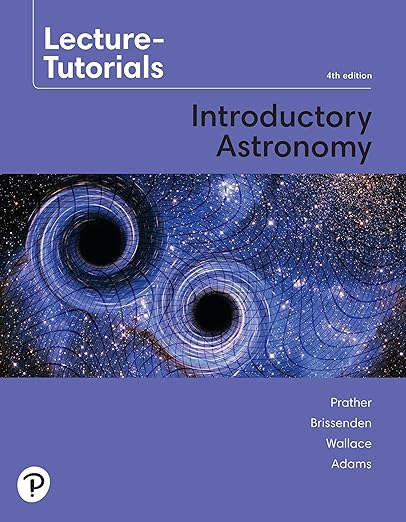
| Required | Lecture Tutorials for Introductory Astronomy, 4th edition | Ed Prather , Gina Brissenden , Colin Wallace, Jeffery Adams | 978-0135807026 |
- Astronomy 2e is a free, online course text in PDF format. Updated often. Most, if not all, assigned readings will be from this textbook. Which sections of the text that are assigned will be shown in-class and in the PDF online notes. We will not cover the entire textbook; so please pay attention to class material to see what topics have been covered and any assigned readings. It is in your best interest to read relevant sections of the text as we go through the course.
- You can purchase a print version of the course textbook via the YSU bookstore or from OpenStax. However, the print version is over 1200 pages, so the online PDF is strongly recommended) Web view is recommended -- the responsive design works seamlessly on any device. If you purchase this book online, be sure get the official OpenStax print version, as simple printouts sold by third parties on Amazon are not verifiable and are not as high-quality.
- The lecture tutorials workbook is required for in-class, student centered activities. Bring this book to class every day. Hardcopies of this workbook that have NOT been written in are strongly preferred. LT_4_cover.jpg
-
There may be secondary readings related to new astronomical discoveries; any links to (for example) related press releases or videos will be shown in-class (and posted on Blackboard) as needed. Other parts of the text covering course material that are not assigned are recommended for students who want additional information to assist with learning course material.
The course readings are subject to change in the event of extenuating circumstances, research developments, current events, and/or to ensure better learning.
Assignments/Assessments
Log in to view more
Tentative Weekly Schedule of Course Topics
| Week of | Reading(s) | Proposed Topic | Due/To Prepare for Class |
|---|---|---|---|
| 8/24 | Text Content – Ch. 1, 2 Assigned: Ch. 1.1-1.4, 2.1 | Course introduction. The scientific method. The night sky and constellations. First planetarium program | |
| 8/31 | Text Content – Ch. 2, 4 Assigned: Ch. 2.1, 4.2 | Positions/motions on the celestial sphere, motions of the Earth. The seasons. | Have Lecture Tutorial workbook by beginning of this week |
| 9/7 | Text Content – Ch. 4, 2 Assigned: Ch. 4.5, 4.7 | Understanding and predicting Moon phases, eclipses. Greek astronomy | |
| 9/14 | Text Content – Ch. 2, 3 Assigned: Ch. 2.4, 3.1 | Copernicus, Galileo, Kepler and Kepler’s Three Laws of Planetary Motion | TERM TEST 1 - Friday Sept. 18 |
| 9/21 | Text Content – Ch. 3, 5 Assigned: Ch. 3.3, 5.2 | Newton’s laws of motion, gravity+ gravity. Orbits. Light and the electromagnetic spectrum | |
| 9/28 | Text Content – Ch. 5 Assigned: Ch. 5.2, 5.6 | The blackbody spectrum and the colors of stars. The types of spectra and spectral lines. The Doppler effect | |
| 10/5 | Text Content – Ch. 6, 7 Assigned: Ch. 6.1, 6.2 | Telescopes, including the different types. Large telescopes in space and on the ground, including the Hubble and the JWST. Introduction to the solar system | |
| 10/12 | Text Content – Ch. 7, 13 (only select parts) Assigned: none | Asteroids, comets, impacts | TERM TEST 2 - Wednesday, Oct. 14 |
| 10/19 | Text Content – Ch. 14, 21 (only select parts) Assigned: 14.4, 21.4 | Meteors. Pluto. The formation of our solar system. Exoplanets | |
| 10/26 | Text Content – Ch. 8, 9, 10 (only select parts) Assigned: None | Earth’s atmosphere. The greenhouse effect and aurorae. The surface of the Moon, craters,, Mercury, Venus, Mars | |
| 11/2 | Text Content – Ch. 11, 12, 15, 16, 19 (only select parts) Assigned:19.2 | Planetary moons. The giant planets and planetary rings. The Sun and nuclear fusion energy generation. The nature and distances to stars (parallax) | |
| 11/9 | Text Content – Ch. 17, 18 (only select parts) Assigned: 18.4 | Properties of stars (luminosity, temperature, The HR Diagram size, mass). | TERM TEST 3 - Monday, Nov. 9 |
| 11/16 | Text Content – Ch. 18, 21, 22 (only select parts) Assigned: 18.4 22.1 | Stellar evolution – the formation and lifetimes of stars. The main sequence. White dwarfs and supernovae, neutron stars | |
| 11/23 | Text Content – Ch. 24, 25 Assigned: 24.5, 24.6 | Black holes. The Milky Way Galaxy | |
| 11/30 | Text Content – Ch. 25, 26, 28, 29 (only select parts) Assigned: 25.3, 26.2 | Dark matter. Galaxies, the expanding universe. Cosmology and the Big Bang model. The Cosmic Microwave Background | |
| 12/7 | FINAL EXAM: WEDNESDAY, DEC. 9, 2026 (8am-10am) |
The course schedule, policies, procedures, and assignments in this course are subject to change in the event of extenuating circumstances, by mutual agreement, and/or to ensure better learning.